
Screwking Hardware Corp.
Screwking Hardware Corp.

HAMMER DRILL BIT SDS+RX4 16MM X 310MM -4CUTTERS - 4932352954
4932352954
Drill bits are cutting tool
s used to create cylindrical
holes, almost always of
circular cross-section.
Drill bits come in many sizes
and have many uses. Bits are
usually connected to a mechanism,
often simply referred to as a drill,
which rotates them and provides
torque and axial force to create
the hole.
A drill bit is a cutting tool that's
fitted into a power drill and used
to cut holes in materials.
They come in a wide variety
of shapes and sizes, but they
all have similar parts as follows:
Point: the top, cone-shaped part
of the drill bit that consists of
a spur and cutting lip.
A drill bit is the cutting
device located at the end
of a drilling machine's drill string.
Like the bit on a hand-held drill,
it creates a passage through the
material into which it bores.
It may assist — to some extent
— in removing the material
which it cuts away to form
the passage.
A drill is a power too
l that uses a rotating drill bit.
It is used to create holes in
various materials, such as wood
, metal, and plastic. Drills are
commonly used in construction
and carpentry work, as well as
in plumbing and electrical work.
To determine the size of
the drill bit, you need to
calculate the diameter of
the hole that needs drilling.
Drill bits with sizes between
1 mm and 20 mm in diamete
r are the most common drill bits.
The drill hole size should be the
same size as the screw's
central core diameter or
slightly smaller.
₱1,775.00
₱2,218.00

HAMMER DRILL BIT SDS+RX4 16MM X 450MM -4CUTTERS - 4932352820
4932352820
Drill bits are cutting tool
s used to create cylindrical
holes, almost always of
circular cross-section.
Drill bits come in many sizes
and have many uses. Bits are
usually connected to a mechanism,
often simply referred to as a drill,
which rotates them and provides
torque and axial force to create
the hole.
A drill bit is a cutting tool that's
fitted into a power drill and used
to cut holes in materials.
They come in a wide variety
of shapes and sizes, but they
all have similar parts as follows:
Point: the top, cone-shaped part
of the drill bit that consists of
a spur and cutting lip.
A drill bit is the cutting
device located at the end
of a drilling machine's drill string.
Like the bit on a hand-held drill,
it creates a passage through the
material into which it bores.
It may assist — to some extent
— in removing the material
which it cuts away to form
the passage.
A drill is a power too
l that uses a rotating drill bit.
It is used to create holes in
various materials, such as wood
, metal, and plastic. Drills are
commonly used in construction
and carpentry work, as well as
in plumbing and electrical work.
To determine the size of
the drill bit, you need to
calculate the diameter of
the hole that needs drilling.
Drill bits with sizes between
1 mm and 20 mm in diamete
r are the most common drill bits.
The drill hole size should be the
same size as the screw's
central core diameter or
slightly smaller.
₱2,260.00
₱3,275.00

HAMMER DRILL BIT SDS+RX4 20MM X 250MM -4CUTTERS - 4932356504
4932356504
Drill bits are cutting tool
s used to create cylindrical
holes, almost always of
circular cross-section.
Drill bits come in many sizes
and have many uses. Bits are
usually connected to a mechanism,
often simply referred to as a drill,
which rotates them and provides
torque and axial force to create
the hole.
A drill bit is a cutting tool that's
fitted into a power drill and used
to cut holes in materials.
They come in a wide variety
of shapes and sizes, but they
all have similar parts as follows:
Point: the top, cone-shaped part
of the drill bit that consists of
a spur and cutting lip.
A drill bit is the cutting
device located at the end
of a drilling machine's drill string.
Like the bit on a hand-held drill,
it creates a passage through the
material into which it bores.
It may assist — to some extent
— in removing the material
which it cuts away to form
the passage.
A drill is a power too
l that uses a rotating drill bit.
It is used to create holes in
various materials, such as wood
, metal, and plastic. Drills are
commonly used in construction
and carpentry work, as well as
in plumbing and electrical work.
To determine the size of
the drill bit, you need to
calculate the diameter of
the hole that needs drilling.
Drill bits with sizes between
1 mm and 20 mm in diamete
r are the most common drill bits.
The drill hole size should be the
same size as the screw's
central core diameter or
slightly smaller.
₱2,511.00
₱3,138.00

HAMMER DRILL BIT SDS+RX4 2X 450MM -4CUTTERS - 4932356505
4932356505
Drill bits are cutting tool
s used to create cylindrical
holes, almost always of
circular cross-section.
Drill bits come in many sizes
and have many uses. Bits are
usually connected to a mechanism,
often simply referred to as a drill,
which rotates them and provides
torque and axial force to create
the hole.
A drill bit is a cutting tool that's
fitted into a power drill and used
to cut holes in materials.
They come in a wide variety
of shapes and sizes, but they
all have similar parts as follows:
Point: the top, cone-shaped part
of the drill bit that consists of
a spur and cutting lip.
A drill bit is the cutting
device located at the end
of a drilling machine's drill string.
Like the bit on a hand-held drill,
it creates a passage through the
material into which it bores.
It may assist — to some extent
— in removing the material
which it cuts away to form
the passage.
A drill is a power too
l that uses a rotating drill bit.
It is used to create holes in
various materials, such as wood
, metal, and plastic. Drills are
commonly used in construction
and carpentry work, as well as
in plumbing and electrical work.
To determine the size of
the drill bit, you need to
calculate the diameter of
the hole that needs drilling.
Drill bits with sizes between
1 mm and 20 mm in diamete
r are the most common drill bits.
The drill hole size should be the
same size as the screw's
central core diameter or
slightly smaller.
₱3,692.00
₱4,615.00
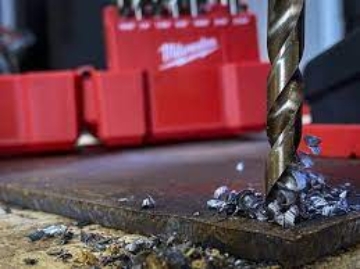
HAMMER DRILL BIT SDS+RX4 25MM X 250MM -4CUTTERS - 4932399333
4932399333
Drill bits are cutting tool
s used to create cylindrical
holes, almost always of
circular cross-section.
Drill bits come in many sizes
and have many uses. Bits are
usually connected to a mechanism,
often simply referred to as a drill,
which rotates them and provides
torque and axial force to create
the hole.
A drill bit is a cutting tool that's
fitted into a power drill and used
to cut holes in materials.
They come in a wide variety
of shapes and sizes, but they
all have similar parts as follows:
Point: the top, cone-shaped part
of the drill bit that consists of
a spur and cutting lip.
A drill bit is the cutting
device located at the end
of a drilling machine's drill string.
Like the bit on a hand-held drill,
it creates a passage through the
material into which it bores.
It may assist — to some extent
— in removing the material
which it cuts away to form
the passage.
A drill is a power too
l that uses a rotating drill bit.
It is used to create holes in
various materials, such as wood
, metal, and plastic. Drills are
commonly used in construction
and carpentry work, as well as
in plumbing and electrical work.
To determine the size of
the drill bit, you need to
calculate the diameter of
the hole that needs drilling.
Drill bits with sizes between
1 mm and 20 mm in diamete
r are the most common drill bits.
The drill hole size should be the
same size as the screw's
central core diameter or
slightly smaller.
₱4,616.00
₱5,770.00

6" MAGNETIC BIT TIP HOLDER - 48-32-4511
48-32-4511
The magnetic bit holder is
an indispensable accompaniment
to any drill driver. It consists of a
hexagonal steel bar, one end
of which grips the chuck.
The other end comes with a
chrome steel cylinder into
which any screwdriver bit will slot.
A small magnet also prevents the
bit from dropping out.
The new locking bit holder
feature two magnets to
maximize magnetic transfer
and holding power to the
fastener and prevent drops.
As with all SHOCKWAVE™
Impact Duty Accessories,
each bit holder features an
optimized SHOCK ZONE™
geometry to provide up to
30X longer life and absorb
3X more torque to prevent breakage.
Work Environment a lighter
weight mag drill is preferred if you
are working high up in the air, etc.
Space Limitations – If you are
working in tight spaces a low-profile
mag drill may be ideal, such as:
The Hougen HMD130 Mag Drill
or the Fein JMC Magforce 90 Mag Drill.
Our SHOCKWAVE™ Impact Duty™
Magnetic Bit Holders are
engineered for extreme
durability and up to 30x life.
The MILWAUKEE magnetic
bit holders are made from
proprietary steel, heat treated
to control hardness.
The SHOCKWAVE™ magnetic bit
holders feature a powerful magnet,
providing you with a secure grip
and unyielding bit engagement
. Each bit holder has a 2-piece
construction for optimal
assembly in abusive
applications.
Our SHOCKWAVE™ Impact Duty™
Magnetic Bit Holders have a
C-ring to retain the insert bit
and can now be used with
Milwaukee SHOCKWAVE™
Impact Duty Insert Magnetic
Nut Drivers (¼”, 5/16”, ⅜”, 7/16”, ½”).
A "bit-holder" will often be
magnetized to hold the bit in
(and incidentally holding the screw as well)
while the other two can be,
but it's not as common.
A "hex bit socket" or "nut driver"
is probably more durable than a
"bit holder" if it matters to you,
for example if you're using a
high torque impact driver.
₱948.00
₱1,185.00

6" IMPACT PHILIPS #2 POWER BIT - 48-32-4802
48-32-4802
#2 Phillips is a common
size and is designed for
sheet rock screws, wood
screws, and many machine screws.
The Best Impact Driver
Bits for Beginners and
Professionals.
An impact driver is
an essential tool for any DIYer
. It can tackle tough fastening
jobs with ease, and it has the
power to drive even the most
stubborn screws or bolts.
Klein's #2 Phillips slotted
Screw-Holding Screwdriver
provide positive gripping
action to hold, start, and drive
slotted screws in confined,
hard-to-reach places.
The unique blade design
allows for both torquing
and tightening of screws.
An impact driver
outputs higher torque
levels than a drill, making
it more efficient for quickly
driving long, wide and large
screws into tough materials.
As a result, it significantly
reduces your work time
when large volumes
of fasteners need
to be secured.
An impact drill uses
lateral percussion
(from the side, in a circular motion).
Once the drill senses that torque
is needed, the drill uses impact
to twist the screw into the surface.
In short, an impact drill is
used for driving screws
and bolts that require
a higher torque.
₱446.00
₱557.00

6" IMPACT SQUARE RECESS #2 POWER BIT - 48-32-4805
48-32-4805
#2 Phillips is a common
size and is designed for
sheet rock screws, wood
screws, and many machine screws.
The Best Impact Driver
Bits for Beginners and
Professionals.
An impact driver is
an essential tool for any DIYer
. It can tackle tough fastening
jobs with ease, and it has the
power to drive even the most
stubborn screws or bolts.
Klein's #2 Phillips slotted
Screw-Holding Screwdriver
provide positive gripping
action to hold, start, and drive
slotted screws in confined,
hard-to-reach places.
The unique blade design
allows for both torquing
and tightening of screws.
An impact driver
outputs higher torque
levels than a drill, making
it more efficient for quickly
driving long, wide and large
screws into tough materials.
As a result, it significantly
reduces your work time
when large volumes
of fasteners need
to be secured.
An impact drill uses
lateral percussion
(from the side, in a circular motion).
Once the drill senses that torque
is needed, the drill uses impact
to twist the screw into the surface.
In short, an impact drill is
used for driving screws
and bolts that require
a higher torque.
₱446.00
₱557.00

6" IMPACT PHILIPS #3 POWER BITS (PACKAGE QUANTITY:10PCS) - 48-32-4808
48-32-4808
#2 Phillips is a common
size and is designed for
sheet rock screws, wood
screws, and many machine screws.
The Best Impact Driver
Bits for Beginners and
Professionals.
An impact driver is
an essential tool for any DIYer
. It can tackle tough fastening
jobs with ease, and it has the
power to drive even the most
stubborn screws or bolts.
Klein's #2 Phillips slotted
Screw-Holding Screwdriver
provide positive gripping
action to hold, start, and drive
slotted screws in confined,
hard-to-reach places.
The unique blade design
allows for both torquing
and tightening of screws.
An impact driver
outputs higher torque
levels than a drill, making
it more efficient for quickly
driving long, wide and large
screws into tough materials.
As a result, it significantly
reduces your work time
when large volumes
of fasteners need
to be secured.
An impact drill uses
lateral percussion
(from the side, in a circular motion).
Once the drill senses that torque
is needed, the drill uses impact
to twist the screw into the surface.
In short, an impact drill is
used for driving screws
and bolts that require
a higher torque.
₱446.00
₱557.00

6" IMPACT SQUARE RECESS #3 POWER BITS(PACKAGE QUANTITY:10PCS) - 48-32-4816
48-32-4816
#2 Phillips is a common
size and is designed for
sheet rock screws, wood
screws, and many machine screws.
The Best Impact Driver
Bits for Beginners and
Professionals.
An impact driver is
an essential tool for any DIYer
. It can tackle tough fastening
jobs with ease, and it has the
power to drive even the most
stubborn screws or bolts.
Klein's #2 Phillips slotted
Screw-Holding Screwdriver
provide positive gripping
action to hold, start, and drive
slotted screws in confined,
hard-to-reach places.
The unique blade design
allows for both torquing
and tightening of screws.
An impact driver
outputs higher torque
levels than a drill, making
it more efficient for quickly
driving long, wide and large
screws into tough materials.
As a result, it significantly
reduces your work time
when large volumes
of fasteners need
to be secured.
An impact drill uses
lateral percussion
(from the side, in a circular motion).
Once the drill senses that torque
is needed, the drill uses impact
to twist the screw into the surface.
In short, an impact drill is
used for driving screws
and bolts that require
a higher torque.
Shockwave™ Impact Driver Bits are engineered to be the Most Durable, Best Fitting driver bits on the market. The Wear Guard Tip™ delivers increased wear resistance which protects the fit over the life of the bit. The Shockzone™ is optimized for for each tip type and length of driver bit to absorb peak torque and prevent breaking. The Custom Alloy76™ has a customized steel and heat treatment per tip type to extend the life of the driver bits, providing up to 50X life vs. competitive impact driver bits. Shockwave™ driver bits are built to deliver extreme durability for the most demanding applications
₱446.00
₱557.00

SCRAPPER - 49-00-5456
49-00-5456
3'' SCRAPPER BLADE MILWAUKEE
MODEL # 49-00-5456
5 PCS PER PACKAGE
₱2,212.00
₱1,700.00

WET CORING - 4932399712
4932399712
While both of these do the same job,
they are often used in different
ways and on different materials.
For example, dry core bits can be
used either dry or with water.
On the other hand, wet core
bits must have water cooling
to operate.
Dry core bits, like the name
suggests, can be used without
water; while wet bits require
water-cooling to operate.
Using dry bits is convenient
and more friendly to DIY users,
but it is often not powerful enough
to match the drilling power of wet
core bits.
A wet core is essentially the
communal bathroom for
several students with lavatories,
water closets, and shower facilities.
We began by identifying the issues
and asking a lot of questions.
Are there others using wet cores?
What's their experience?
How many students should
a wet core serve?
Wet drills will typically drive
the bit through the core faster
than dry drill bits because the
lubrication of the water helps
loosen the material's surface.
Wet core drilling also leaves
behind a cleaner, more stable
hole surface because the water
minimizes the dust produced
during drilling.
Varying with application,
an average electroplated
diamond core drill/bit will
last you 80 to 120 holes.
Whereas a conventional
metal bond (sintered)
diamond drill should last
you about 1,200 holes.
Water used in diamond
drilling and sawing used
for the tools acts as a coolant
and lubricant for the blade and
motor. When water is not used,
tools will overheat and become
unusable, the drill bit weakens
, and the saw blade loses tension
resulting in imprecise cuts.
Water is introduced to
do two different things.
First, since core
drilling in concrete
creates a lot of friction,
the drill bit needs to be cooled.
Second, the water collects all
of the dust and debris getting
thrown around and forms a mixture.
Three coring methods are
practiced: conventional,
wireline, and sidewall.
Conventional coring, which
refers to core taken without
regard to precise orientation
, encompasses arrange of
coring devices and core barrels.
₱46,600.00
₱58,250.00

WET CORING - 4932399179
4932399179
While both of these do the same job,
they are often used in different
ways and on different materials.
For example, dry core bits can be
used either dry or with water.
On the other hand, wet core
bits must have water cooling
to operate.
Dry core bits, like the name
suggests, can be used without
water; while wet bits require
water-cooling to operate.
Using dry bits is convenient
and more friendly to DIY users,
but it is often not powerful enough
to match the drilling power of wet
core bits.
A wet core is essentially the
communal bathroom for
several students with lavatories,
water closets, and shower facilities.
We began by identifying the issues
and asking a lot of questions.
Are there others using wet cores?
What's their experience?
How many students should
a wet core serve?
Wet drills will typically drive
the bit through the core faster
than dry drill bits because the
lubrication of the water helps
loosen the material's surface.
Wet core drilling also leaves
behind a cleaner, more stable
hole surface because the water
minimizes the dust produced
during drilling.
Varying with application,
an average electroplated
diamond core drill/bit will
last you 80 to 120 holes.
Whereas a conventional
metal bond (sintered)
diamond drill should last
you about 1,200 holes.
Water used in diamond
drilling and sawing used
for the tools acts as a coolant
and lubricant for the blade and
motor. When water is not used,
tools will overheat and become
unusable, the drill bit weakens
, and the saw blade loses tension
resulting in imprecise cuts.
Water is introduced to
do two different things.
First, since core
drilling in concrete
creates a lot of friction,
the drill bit needs to be cooled.
Second, the water collects all
of the dust and debris getting
thrown around and forms a mixture.
Three coring methods are
practiced: conventional,
wireline, and sidewall.
Conventional coring, which
refers to core taken without
regard to precise orientation
, encompasses arrange of
coring devices and core barrels.
₱108,000.00
₱135,000.00

DRY CORING - 4930399753
4930399753
Dry use core drills are
primarily designed for
drilling into general house
building materials such as soft
facing stone, sandstone,
brick and block.
Dry core drills are designed to be
used with hammer or percussion
actions turned off and only rotary
action applied.
Gilson's coring equipment
can be used to perform in a
wide range of drilling applications.
Applications include sampling
concrete pavements, slabs,
structures, cutting, and
trimming of concrete specimens
in sample preparation for testing.
The equipment can also be used
for sampling asphalt.
You can use dry core bits
without water to drill
through brick and concrete blocks.
On the other hand,
wet core bits require
water cooling for safe
operation. People doing
DIY projects often find dry core
bits to be more convenient and
easier to work with. However,
wet core bits are typically
more powerful.
You can use dry core bits
without water to drill through
brick and concrete blocks
. On the other hand,
wet core bits require
water cooling for safe operation.
People doing DIY projects often
find dry core bits to be more
convenient and easier to
work with. However,
wet core bits are typically
more powerful.
Core drilling refers to
the process of using a
hollow drill to bore holes
through certain surfaces.
Through core drilling, teams
can learn the density,
chemical composition,
strength, and other
properties of specific
materials.
Three coring methods
are practiced: conventional
, wireline, and sidewall.
Conventional coring, which
refers to core taken without
regard to precise orientation,
encompasses arrange of
coring devices and core barrels.
As the name implies
, this involves the cutting
of a core at the bottom
of the hole. In most cases
it involves the drilling
of hole with a hollow bit
, allowing a solid cylinde
r of uncut formation to
enter an inner retainer or core
barrel which may later be
retrieved to surfACE
₱27,500.00
₱34,375.00

DRY CORING - 4932399163
4932399163
Dry use core drills are
primarily designed for
drilling into general house
building materials such as soft
facing stone, sandstone,
brick and block.
Dry core drills are designed to be
used with hammer or percussion
actions turned off and only rotary
action applied.
Gilson's coring equipment
can be used to perform in a
wide range of drilling applications.
Applications include sampling
concrete pavements, slabs,
structures, cutting, and
trimming of concrete specimens
in sample preparation for testing.
The equipment can also be used
for sampling asphalt.
You can use dry core bits
without water to drill
through brick and concrete blocks.
On the other hand,
wet core bits require
water cooling for safe
operation. People doing
DIY projects often find dry core
bits to be more convenient and
easier to work with. However,
wet core bits are typically
more powerful.
You can use dry core bits
without water to drill through
brick and concrete blocks
. On the other hand,
wet core bits require
water cooling for safe operation.
People doing DIY projects often
find dry core bits to be more
convenient and easier to
work with. However,
wet core bits are typically
more powerful.
Core drilling refers to
the process of using a
hollow drill to bore holes
through certain surfaces.
Through core drilling, teams
can learn the density,
chemical composition,
strength, and other
properties of specific
materials.
Three coring methods
are practiced: conventional
, wireline, and sidewall.
Conventional coring, which
refers to core taken without
regard to precise orientation,
encompasses arrange of
coring devices and core barrels.
As the name implies
, this involves the cutting
of a core at the bottom
of the hole. In most cases
it involves the drilling
of hole with a hollow bit
, allowing a solid cylinde
r of uncut formation to
enter an inner retainer or core
barrel which may later be
retrieved to surfACE
₱33,000.00
₱41,250.00

DRY CORING - 4932399165
4932399165
Dry use core drills are
primarily designed for
drilling into general house
building materials such as soft
facing stone, sandstone,
brick and block.
Dry core drills are designed to be
used with hammer or percussion
actions turned off and only rotary
action applied.
Gilson's coring equipment
can be used to perform in a
wide range of drilling applications.
Applications include sampling
concrete pavements, slabs,
structures, cutting, and
trimming of concrete specimens
in sample preparation for testing.
The equipment can also be used
for sampling asphalt.
You can use dry core bits
without water to drill
through brick and concrete blocks.
On the other hand,
wet core bits require
water cooling for safe
operation. People doing
DIY projects often find dry core
bits to be more convenient and
easier to work with. However,
wet core bits are typically
more powerful.
You can use dry core bits
without water to drill through
brick and concrete blocks
. On the other hand,
wet core bits require
water cooling for safe operation.
People doing DIY projects often
find dry core bits to be more
convenient and easier to
work with. However,
wet core bits are typically
more powerful.
Core drilling refers to
the process of using a
hollow drill to bore holes
through certain surfaces.
Through core drilling, teams
can learn the density,
chemical composition,
strength, and other
properties of specific
materials.
Three coring methods
are practiced: conventional
, wireline, and sidewall.
Conventional coring, which
refers to core taken without
regard to precise orientation,
encompasses arrange of
coring devices and core barrels.
As the name implies
, this involves the cutting
of a core at the bottom
of the hole. In most cases
it involves the drilling
of hole with a hollow bit
, allowing a solid cylinde
r of uncut formation to
enter an inner retainer or core
barrel which may later be
retrieved to surfACE
₱41,000.00
₱51,250.00

DRY CORING - 4932399166
4932399166
Dry use core drills are
primarily designed for
drilling into general house
building materials such as soft
facing stone, sandstone,
brick and block.
Dry core drills are designed to be
used with hammer or percussion
actions turned off and only rotary
action applied.
Gilson's coring equipment
can be used to perform in a
wide range of drilling applications.
Applications include sampling
concrete pavements, slabs,
structures, cutting, and
trimming of concrete specimens
in sample preparation for testing.
The equipment can also be used
for sampling asphalt.
You can use dry core bits
without water to drill
through brick and concrete blocks.
On the other hand,
wet core bits require
water cooling for safe
operation. People doing
DIY projects often find dry core
bits to be more convenient and
easier to work with. However,
wet core bits are typically
more powerful.
You can use dry core bits
without water to drill through
brick and concrete blocks
. On the other hand,
wet core bits require
water cooling for safe operation.
People doing DIY projects often
find dry core bits to be more
convenient and easier to
work with. However,
wet core bits are typically
more powerful.
Core drilling refers to
the process of using a
hollow drill to bore holes
through certain surfaces.
Through core drilling, teams
can learn the density,
chemical composition,
strength, and other
properties of specific
materials.
Three coring methods
are practiced: conventional
, wireline, and sidewall.
Conventional coring, which
refers to core taken without
regard to precise orientation,
encompasses arrange of
coring devices and core barrels.
As the name implies
, this involves the cutting
of a core at the bottom
of the hole. In most cases
it involves the drilling
of hole with a hollow bit
, allowing a solid cylinde
r of uncut formation to
enter an inner retainer or core
barrel which may later be
retrieved to surfACE
₱54,000.00
₱67,500.00

DRY CORING - 4932399169
4932399169
Dry use core drills are
primarily designed for
drilling into general house
building materials such as soft
facing stone, sandstone,
brick and block.
Dry core drills are designed to be
used with hammer or percussion
actions turned off and only rotary
action applied.
Gilson's coring equipment
can be used to perform in a
wide range of drilling applications.
Applications include sampling
concrete pavements, slabs,
structures, cutting, and
trimming of concrete specimens
in sample preparation for testing.
The equipment can also be used
for sampling asphalt.
You can use dry core bits
without water to drill
through brick and concrete blocks.
On the other hand,
wet core bits require
water cooling for safe
operation. People doing
DIY projects often find dry core
bits to be more convenient and
easier to work with. However,
wet core bits are typically
more powerful.
You can use dry core bits
without water to drill through
brick and concrete blocks
. On the other hand,
wet core bits require
water cooling for safe operation.
People doing DIY projects often
find dry core bits to be more
convenient and easier to
work with. However,
wet core bits are typically
more powerful.
Core drilling refers to
the process of using a
hollow drill to bore holes
through certain surfaces.
Through core drilling, teams
can learn the density,
chemical composition,
strength, and other
properties of specific
materials.
Three coring methods
are practiced: conventional
, wireline, and sidewall.
Conventional coring, which
refers to core taken without
regard to precise orientation,
encompasses arrange of
coring devices and core barrels.
As the name implies
, this involves the cutting
of a core at the bottom
of the hole. In most cases
it involves the drilling
of hole with a hollow bit
, allowing a solid cylinde
r of uncut formation to
enter an inner retainer or core
barrel which may later be
retrieved to surfACE
₱65,000.00
₱81,250.00

9" TORCH DIAMOND GRIT SUPER SAWZALL BLADE - 48-00-1450
48-00-1450
There are many types of
diamond blade, and they
have many uses, including
cutting stone, concrete, asphalt,
bricks, coal balls, glass, and
ceramics in the construction
industry; cutting semiconductor
materials in the semiconductor
industry; and cutting gemstones,
including diamonds, in the gem
industry.
Carbide tipped blades
cut harder, denser metals
like hardened steel, cast iron,
alloys including boron steel,
and higher grades of stainless steel.
These blades are extremely hard,
heat-resistant, and impact-resistant.
They are typically 8 TPI.
In a diamond blade,
he synthetic diamond
materials are mixed with
other materials such as iron
or steel to form the right
blade with outstanding
diamond segments along
the cutting edge. Diamond
blades are generally used for
cutting hard materials.
The short answer is no,
the diamonds used in
diamond blades are not real.
The diamond crystals
that are used in the construction
of the diamond blade segments
are artificial and are made with
the purpose of being stronger than
natural diamonds.
Carbon steel blades
are flexible to allow
bending without breaking and
are great for cutting wood or plastic.
Carbon steel blades are generally the
best reciprocating saw blades for trees.
High-speed steel blades have durable
teeth but are more prone to
breakage and last up to five times
longer than high-carbon steel.
Diamond, if you don't
know already, is the
hardest naturally occurring
substance known to man,
which is why it's used to
cut hard materials like tile,
steel, and concrete.
Placing a diamond under UV light
and watching the reaction can
sometimes be a good indicator
of whether a diamond is real or not.
Most diamonds emit a blue-colored
glow under UV light, but not all of them.
So if your diamond does,
you can feel pretty confident
that it is a real diamond.
In 1951, Milwaukee produced
an unparalleled new tool –
the Sawzall® Reciprocating Saw.
As the first portable hacksaw
incorporating a reciprocating
mechanism, it had just three
moving parts and was designed
to withstand daily abuse and
still provide a 3/4” stroke ideal
for sawing and roughing out.
₱2,600.00
₱3,250.00

COMPACT PORTABLE BAND SAW BLADE - 48-39-0529
48-39-0529
In general, it is recommended
to use the widest blade your saw
will allow and for radius cuts you will
want a 3/4″ width or below, depending
on the radius you want to achieve.
Wood Cutting – We carry 3 styles of
wood cutting bandsaw blades. Proforce,
Shear Force and the Resaw King.
Blades for standard portable
band saws have a length of 32-7/8"
to 35-3/8" and are used to cut metal
pipe, strut channel, and threaded rod.
They are used on medium-sized
band saws with a 3" to 3-1/2"
cutting capacity.
The number of TPI define
s the pitch of the blade and
can vary from 1 to 32 TPI.
On some bandsaw blades
there are different pitches on
the same blade referred to as
Vari-Pitch. TPI is measured from
gullet to gullet, not tooth tip to
tooth tip – this is known as pitch.
Bandsaw blades differ in thickness
, width, length, and tooth configuration.
Length varies by machine,
but the size of your saw's
wheels typically determines
thickness and width: Smaller
machines (9–12" wheels)
need thinner blades to prevent
breaking the welds.
Operators cut metal into smaller
sizes and slice various things.
For instance, you would use a
portable bandsaw to cut bolts
, screws, bar stocks, and metal
studs. Portable bandsaws are
metal shop must-haves because
they're high-quality machines
and easy to use.
The three main types of
bandsaw blades for cutting
metal are carbon steel,
high-speed steel, and
alloy steel. Carbon steel
blades are used for cutting
softer metals like aluminum,
copper, bronze, brass,
and other nonferrous metals.
₱4,000.00
₱5,000.00

COMPACT PORTABLE BAND SAW BLADE - 48-39-0539
48-39-0539
In general, it is recommended
to use the widest blade your saw
will allow and for radius cuts you will
want a 3/4″ width or below, depending
on the radius you want to achieve.
Wood Cutting – We carry 3 styles of
wood cutting bandsaw blades. Proforce,
Shear Force and the Resaw King.
Blades for standard portable
band saws have a length of 32-7/8"
to 35-3/8" and are used to cut metal
pipe, strut channel, and threaded rod.
They are used on medium-sized
band saws with a 3" to 3-1/2"
cutting capacity.
The number of TPI define
s the pitch of the blade and
can vary from 1 to 32 TPI.
On some bandsaw blades
there are different pitches on
the same blade referred to as
Vari-Pitch. TPI is measured from
gullet to gullet, not tooth tip to
tooth tip – this is known as pitch.
Bandsaw blades differ in thickness
, width, length, and tooth configuration.
Length varies by machine,
but the size of your saw's
wheels typically determines
thickness and width: Smaller
machines (9–12" wheels)
need thinner blades to prevent
breaking the welds.
Operators cut metal into smaller
sizes and slice various things.
For instance, you would use a
portable bandsaw to cut bolts
, screws, bar stocks, and metal
studs. Portable bandsaws are
metal shop must-haves because
they're high-quality machines
and easy to use.
The three main types of
bandsaw blades for cutting
metal are carbon steel,
high-speed steel, and
alloy steel. Carbon steel
blades are used for cutting
softer metals like aluminum,
copper, bronze, brass,
and other nonferrous metals.
₱4,000.00
₱5,000.00

COMPACT PORTABLE BAND SAW BLADE - 48-39-0572
48-39-0572
In general, it is recommended
to use the widest blade your saw
will allow and for radius cuts you will
want a 3/4″ width or below, depending
on the radius you want to achieve.
Wood Cutting – We carry 3 styles of
wood cutting bandsaw blades. Proforce,
Shear Force and the Resaw King.
Blades for standard portable
band saws have a length of 32-7/8"
to 35-3/8" and are used to cut metal
pipe, strut channel, and threaded rod.
They are used on medium-sized
band saws with a 3" to 3-1/2"
cutting capacity.
The number of TPI define
s the pitch of the blade and
can vary from 1 to 32 TPI.
On some bandsaw blades
there are different pitches on
the same blade referred to as
Vari-Pitch. TPI is measured from
gullet to gullet, not tooth tip to
tooth tip – this is known as pitch.
Bandsaw blades differ in thickness
, width, length, and tooth configuration.
Length varies by machine,
but the size of your saw's
wheels typically determines
thickness and width: Smaller
machines (9–12" wheels)
need thinner blades to prevent
breaking the welds.
Operators cut metal into smaller
sizes and slice various things.
For instance, you would use a
portable bandsaw to cut bolts
, screws, bar stocks, and metal
studs. Portable bandsaws are
metal shop must-haves because
they're high-quality machines
and easy to use.
The three main types of
bandsaw blades for cutting
metal are carbon steel,
high-speed steel, and
alloy steel. Carbon steel
blades are used for cutting
softer metals like aluminum,
copper, bronze, brass,
and other nonferrous metals.
₱3,360.00
₱4,200.00

HEX DRILL BIT 21MM - 4932 3995 72
4932 3995 72
Drill bit sizes are
written as irreducible fractions
. So, instead of 78/64 inch, or
1 14/64 inch, the size is noted
as 1 7/32 inch. Below is a cart
providing the decimal-fraction
equivalents that are most relevant
to fractional-inch drill bit sizes
(that is, 0 to 1 by 64ths). (Decimal places for .
If you know the size of the screw,
you can locate the size of the
drill bit by looking at the opposite
end from the sharp point of the bit.
It's likely engraved there.
Standard metric sizes are
defined in ISO 2936:2014
"Assembly tools for screws and nuts
—Hexagon socket screw keys", also
known as DIN 911. The full set of
defined sizes are: 0.7 mm, 0.9 mm,
1.3 mm. 1.5 to 5 mm in 0.5 mm increments.
They're great for being able to
be quickly swapped out if you
an adapter, and even without an
adapter that hex shank is a lot easier
for your drill chuck to grab onto when
using very small bits like 1/16”
& smaller.
You'll see a list of numbers from
to 10 or 20. These are used to
set the clutch to deliver a torque range.
The higher the number on the collar,
the higher the torque and the larger the
fastener that can be driven.
To adjust your clutch, align the
arrow to a lower setting and start
driving a screw.
Take a loose screw and
compare it to the size of
the bit you need to use,
using the screw's core rather
than its flute. A bit that is very
slightly smaller than the screw
will ensure a proper fit. Choosing
a bit that is too small means that
the screw will get stuck so take care
to choose carefully.
In hex, four digits of a binary
number can be represented by
a single hex digit. Dividing a
binary number into 4-bit sets
means that each set can have
a possible value of between 0000
and 1111, allowing 16 number
combinations from 0 to 15. With
the base value as 16, the maximum
value of a digit is 15.
₱15,500.00
₱19,375.00

HEX DRILL BIT 21MM - 4932 3995 73
4932 3995 73
Drill bit sizes are
written as irreducible fractions
. So, instead of 78/64 inch, or
1 14/64 inch, the size is noted
as 1 7/32 inch. Below is a cart
providing the decimal-fraction
equivalents that are most relevant
to fractional-inch drill bit sizes
(that is, 0 to 1 by 64ths). (Decimal places for .
If you know the size of the screw,
you can locate the size of the
drill bit by looking at the opposite
end from the sharp point of the bit.
It's likely engraved there.
Standard metric sizes are
defined in ISO 2936:2014
"Assembly tools for screws and nuts
—Hexagon socket screw keys", also
known as DIN 911. The full set of
defined sizes are: 0.7 mm, 0.9 mm,
1.3 mm. 1.5 to 5 mm in 0.5 mm increments.
They're great for being able to
be quickly swapped out if you
an adapter, and even without an
adapter that hex shank is a lot easier
for your drill chuck to grab onto when
using very small bits like 1/16”
& smaller.
You'll see a list of numbers from
to 10 or 20. These are used to
set the clutch to deliver a torque range.
The higher the number on the collar,
the higher the torque and the larger the
fastener that can be driven.
To adjust your clutch, align the
arrow to a lower setting and start
driving a screw.
Take a loose screw and
compare it to the size of
the bit you need to use,
using the screw's core rather
than its flute. A bit that is very
slightly smaller than the screw
will ensure a proper fit. Choosing
a bit that is too small means that
the screw will get stuck so take care
to choose carefully.
In hex, four digits of a binary
number can be represented by
a single hex digit. Dividing a
binary number into 4-bit sets
means that each set can have
a possible value of between 0000
and 1111, allowing 16 number
combinations from 0 to 15. With
the base value as 16, the maximum
value of a digit is 15.
₱16,000.00
₱20,000.00

HEX DRILL BIT 21MM - 4932 3990 40
4932 3990 40
Drill bit sizes are
written as irreducible fractions
. So, instead of 78/64 inch, or
1 14/64 inch, the size is noted
as 1 7/32 inch. Below is a cart
providing the decimal-fraction
equivalents that are most relevant
to fractional-inch drill bit sizes
(that is, 0 to 1 by 64ths). (Decimal places for .
If you know the size of the screw,
you can locate the size of the
drill bit by looking at the opposite
end from the sharp point of the bit.
It's likely engraved there.
Standard metric sizes are
defined in ISO 2936:2014
"Assembly tools for screws and nuts
—Hexagon socket screw keys", also
known as DIN 911. The full set of
defined sizes are: 0.7 mm, 0.9 mm,
1.3 mm. 1.5 to 5 mm in 0.5 mm increments.
They're great for being able to
be quickly swapped out if you
an adapter, and even without an
adapter that hex shank is a lot easier
for your drill chuck to grab onto when
using very small bits like 1/16”
& smaller.
You'll see a list of numbers from
to 10 or 20. These are used to
set the clutch to deliver a torque range.
The higher the number on the collar,
the higher the torque and the larger the
fastener that can be driven.
To adjust your clutch, align the
arrow to a lower setting and start
driving a screw.
Take a loose screw and
compare it to the size of
the bit you need to use,
using the screw's core rather
than its flute. A bit that is very
slightly smaller than the screw
will ensure a proper fit. Choosing
a bit that is too small means that
the screw will get stuck so take care
to choose carefully.
In hex, four digits of a binary
number can be represented by
a single hex digit. Dividing a
binary number into 4-bit sets
means that each set can have
a possible value of between 0000
and 1111, allowing 16 number
combinations from 0 to 15. With
the base value as 16, the maximum
value of a digit is 15.
₱35,000.00
₱43,750.00

DIAMOND DRILLING MOTOR + ALUMINUM RIG - DCM 2-350 C + DR 350 T
DCM 2-350 C + DR 350 T
The majority of angle grinders
have a fixed speed.
Most 4-½-inch models run
at 10,000 or 11,000 rpm.
The said, 7-inch and 9-inch models
run between 5,000 and 8,000 rpm.
A few angle grinders
have variable speed and
can run slow enough for
polishing or buffing.
Grinder's come in lots of
different disc sizes,
but the most common
sizes are 115mm (4 ½”)
and 230mm (9”). You can
purchase different discs/heads/
wheels depending on the task you
want to complete - just make sure
they're the right size for your grinder!
4' (100mm) angle grinders,
as the name suggests,
accept grinding discs up
to 100mm in size.
These grinders are relatively
small in size, and are suitable
for smaller jobs. The size of
disc that the grinder can accept
dictates the depth of cut that
the grinder can achieve.
Complete various grinding
applications and get fast
material removal with the 9-in.
4HP Angle Grinder. Featuring a
high-powered motor with
overload protection, this grinder
delivers 6,500 rpm for tough jobs.
The GA9060 weighs only
5.5 Kg and is built with
comfort and ergonomic
features for extended use.
The grinder features an ergonomic
rubberised handle with
trigger switch, and the gear
housing can be positioned
every 90 degrees for operator
convenience.
₱500,000.00
₱625,000.00

M12 LED LIGHT (BARE) - M12LL-0
M12LL-0
The M12 LED High
Performance Area
Light has an impact
and chemical resistant
lens able to withstand
the toughest of job site conditions.
The combination of these
technologies offers
professionals the
highest quality LED
lighting solution,
on or off the job site.
The high efficienc
y and directional
nature of LEDs
makes them ideal
for many industrial uses.
LEDs are increasingly
common in street lights,
parking garage lighting,
walkway and other outdoor
area lighting, refrigerated
case lighting, modular lighting,
and task lighting.
This scale runs from
1500 degrees Kelvin
(about the color of a candle)
up to 9000 degrees
Kelvin (the same amount of light
from a bright blue sky).
The scale shows a warm
yellow tone up to a cool blue tone.
The higher the degree of Kelvin,
the whiter and brighter the light
will appear.
Lumens measure how
much light you are
getting from a bulb.
More lumens means
it's a brighter light;
fewer lumens means
it's a dimmer light.
A flashlight with a 1500
lumen can illuminate a
distance up to 250 m or
above, as it refers to one
of the most powerful
and strongest lightning
types. Moreover
, this type of light
helps in observing
objects from a far
distance.
LEDs consume less
power, and they
require low operational
voltage. No warm-up time
is needed for LEDs.
The emitted light is
monochromatic.
They exhibit long
life and ruggedness.
On packaging,
the lumen rating
is indicated by a number
followed by "lm,"
the abbreviation for lumens.
The higher the lumen
rating, the brighter the
bulb will be.
₱10,000.00
₱12,500.00

M12™ LED HIGH PERFORMANCE FLASHLIGHT (BARE) - M12 MLED-0
M12 MLED-0
The M12 LED High
Performance Area
Light has an impact
and chemical resistant
lens able to withstand
the toughest of job site conditions.
The combination of these
technologies offers
professionals the
highest quality LED
lighting solution,
on or off the job site.
The high efficienc
y and directional
nature of LEDs
makes them ideal
for many industrial uses.
LEDs are increasingly
common in street lights,
parking garage lighting,
walkway and other outdoor
area lighting, refrigerated
case lighting, modular lighting,
and task lighting.
This scale runs from
1500 degrees Kelvin
(about the color of a candle)
up to 9000 degrees
Kelvin (the same amount of light
from a bright blue sky).
The scale shows a warm
yellow tone up to a cool blue tone.
The higher the degree of Kelvin,
the whiter and brighter the light
will appear.
Lumens measure how
much light you are
getting from a bulb.
More lumens means
it's a brighter light;
fewer lumens means
it's a dimmer light.
A flashlight with a 1500
lumen can illuminate a
distance up to 250 m or
above, as it refers to one
of the most powerful
and strongest lightning
types. Moreover
, this type of light
helps in observing
objects from a far
distance.
LEDs consume less
power, and they
require low operational
voltage. No warm-up time
is needed for LEDs.
The emitted light is
monochromatic.
They exhibit long
life and ruggedness.
On packaging,
the lumen rating
is indicated by a number
followed by "lm,"
the abbreviation for lumens.
The higher the lumen
rating, the brighter the
bulb will be.
₱19,500.00
₱24,375.00

CHARGER - C12C
C12C
As a rule of thumb your battery
charger should be 10% - 20%
of the Ah rating of the battery.
E.g A 100Ah battery would require
a 10 Amp charger as a minimum.
prevent overcharging, you
should keep the charger size
to within 30% of the total
capacity.
Single-cell batteries
have a lower power output
and a smaller size —
typically, the maximum
discharge current is between
1C and 3C (e.g. 1Ah = 1A to 3A).
This means that single-cell
chargers are often used for
smaller mobile devices,
such as phones, watches,
and headphones.
A battery charger is a
device that provides
Direct Current (DC) to
the battery to restore
the used-up electrolyte.
So ideally, when all the electrolytes
of the battery are restored,
it's current supply should stop.
A battery charger,
recharger, or simply charger,
is a device that stores
energy in a battery by running
an electric current through it.
The charging protocol
(how much voltage or current for how long,
and what to do when charging is complete)
depends on the size and
type of the battery being charged.
The 12V Battery Charger –
Model 5607-00 is a solid-state
battery charger designed to
charge your 12-volt battery
and maintain and hold it to
a full charge. The 12V Battery
Charger will keep your
battery fully charged and
can be plugged in for as long as you want.
So at what percentage
should you charge your phone?
The best practice for
preserving phone battery
health is to plug it in at around
20% and charge it up to 80-90%.
This is especially important if you
use fast charging,
as charging from 0%
will cause a lot of heat,
and from 80% up, fast charging
becomes less efficient.
Constant current (CC)
charging initially allows
the full current of the
charger during the BULK stage to flow
into the battery regardless
of the battery state of charge or the
temperature until the battery terminal
voltage reaches a pre-set steady state.
They're called alternating
current (AC) and direct current (DC) power.
The power that comes from the grid is always
AC. However, batteries,
like the one in your EV, c
an only store power as DC.
That's why most electronic
devices have a converter built
into the plug.
₱6,800.00
₱8,500.00

2.0AH RED LI-ION - M12B2
M12B2
As a rule of thumb your battery
charger should be 10% - 20%
of the Ah rating of the battery.
E.g A 100Ah battery would require
a 10 Amp charger as a minimum.
prevent overcharging, you
should keep the charger size
to within 30% of the total
capacity.
Single-cell batteries
have a lower power output
and a smaller size —
typically, the maximum
discharge current is between
1C and 3C (e.g. 1Ah = 1A to 3A).
This means that single-cell
chargers are often used for
smaller mobile devices,
such as phones, watches,
and headphones.
A battery charger is a
device that provides
Direct Current (DC) to
the battery to restore
the used-up electrolyte.
So ideally, when all the electrolytes
of the battery are restored,
it's current supply should stop.
A battery charger,
recharger, or simply charger,
is a device that stores
energy in a battery by running
an electric current through it.
The charging protocol
(how much voltage or current for how long,
and what to do when charging is complete)
depends on the size and
type of the battery being charged.
The 12V Battery Charger –
Model 5607-00 is a solid-state
battery charger designed to
charge your 12-volt battery
and maintain and hold it to
a full charge. The 12V Battery
Charger will keep your
battery fully charged and
can be plugged in for as long as you want.
So at what percentage
should you charge your phone?
The best practice for
preserving phone battery
health is to plug it in at around
20% and charge it up to 80-90%.
This is especially important if you
use fast charging,
as charging from 0%
will cause a lot of heat,
and from 80% up, fast charging
becomes less efficient.
Constant current (CC)
charging initially allows
the full current of the
charger during the BULK stage to flow
into the battery regardless
of the battery state of charge or the
temperature until the battery terminal
voltage reaches a pre-set steady state.
They're called alternating
current (AC) and direct current (DC) power.
The power that comes from the grid is always
AC. However, batteries,
like the one in your EV, c
an only store power as DC.
That's why most electronic
devices have a converter built
into the plug.
₱5,500.00
₱6,875.00
Min:
₱0.00
Max:
₱1,887,900.00
₱0
₱1887900